


Cross-border trade keeps growing, and Switzerland is one of the most appealing markets around, with e-commerce revenue in the billions of Swiss francs. But unlike shipping within the EU, shipping to Switzerland comes with some pitfalls you should know about, above all customs. This guide walks you through everything you need to know about shipping parcels to Switzerland and dealing with Swiss customs.
Switzerland: an attractive market
Switzerland is a wealthy country with a strong, growing economy, and Swiss consumers buy a lot from abroad. One reason: Swiss shoppers have no statutory right of withdrawal on online orders, which makes foreign online retailers legally attractive compared with local competitors. The catch is that Switzerland isn't a member of the EU, so customs duties apply.
What Swiss customers expect
Swiss shoppers expect the same service from foreign retailers as from stores at home: free shipping and free returns, fast delivery, and, importantly, delivery to the door without a surprise payment. Unfortunately, shipping to Switzerland can bring nasty surprises: customs duties, taxes, and clearance handling fees can add substantially to a low-value order, which understandably annoys customers. Plan for this in advance and be transparent.
Swiss customs
A key point: Switzerland is the only trading nation in the world that applies a weight-based customs system. Goods are cleared not by their value but by their weight, with tariffs calculated in "francs per 100 kg". Inadequately declared parcels are opened by Swiss customs, and the recipient is then charged a fee. Avoid this by filling out the accompanying documents for your shipment carefully.
Transport and import documents
To ship a parcel to Switzerland, all official requirements must be met. Include the following documents:
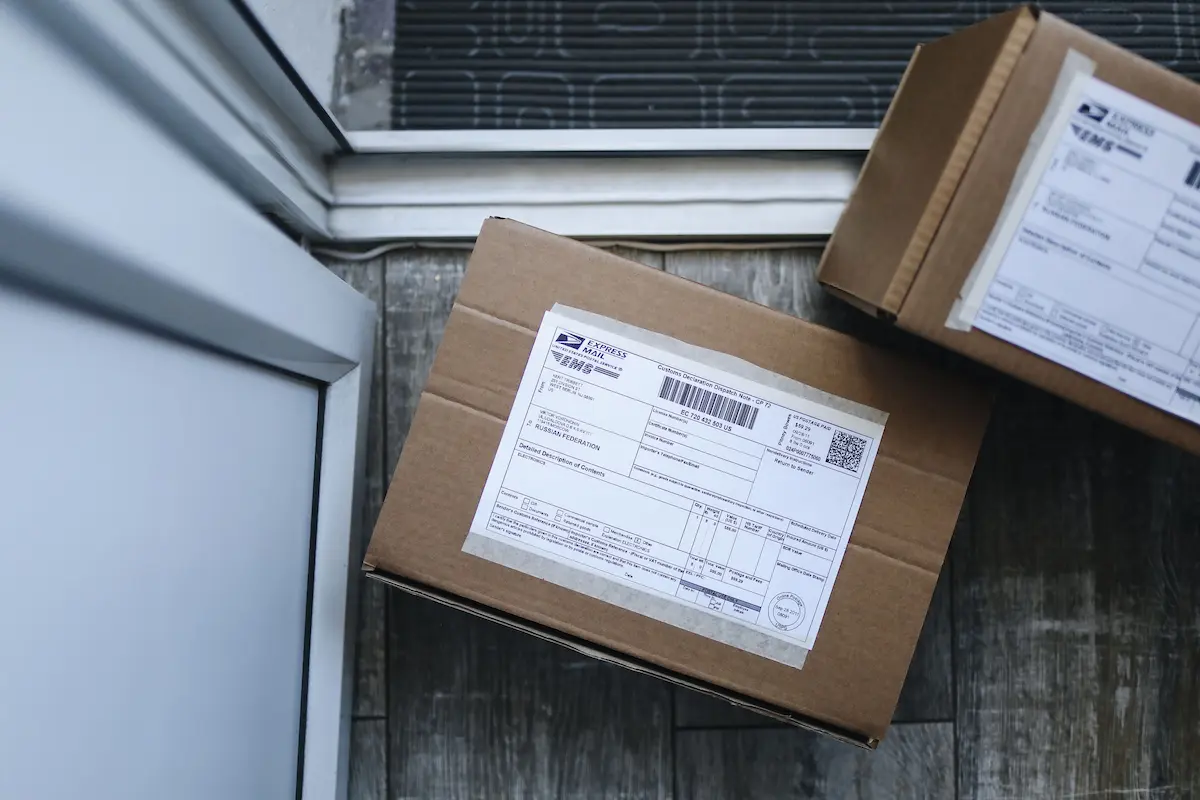
1. The customs declaration. For a small packet, use the CN22 customs declaration for lower-value goods; above roughly €370 in value, use the CN23. For parcels, always use the CN23, regardless of value. For exports of goods worth more than €1,000, an electronic export declaration is also required. Attach the CN22 or CN23 in a document pouch, clearly visible on the outside of the parcel.
2. The commercial invoice. When you ship goods as a retailer, enclose a commercial invoice in addition to the customs declaration, even for a single item. Attach it to the outside of the box in a transparent pouch, not inside, so customs can see it without opening the parcel (otherwise a fee applies). The invoice value should include shipping costs: if you sold an item for €1.50 with €5 shipping, the dutiable value is €6.50. Check your carrier's rules too, as some may require an English-language invoice, and it's wise to enclose a copy as well as the original.
3. The export accompanying document. If an export accompanying document (EAD) is needed, attach it on top in the transparent pouch. For certain shipments a certificate of origin may also be requested.
Charges to Swiss customs
Charges to Swiss customs are generally based on the gross weight (goods including packaging), and often come to less than one Swiss franc per kilogram. The exceptions are goods like alcohol, tobacco, food, textiles, and jewelry, which are subject to higher duties or other levies such as spirits tax.
Informing your customers about customs
When shipping to Switzerland, you're required to inform customers before purchase about any taxes and fees that may apply. Paying the customs charges is then the recipient's responsibility. Make this clear in your store to avoid legal trouble or annoyed customers. For example:
"For deliveries to a non-EU country, additional customs duties, taxes, or fees may be payable by the customer, not to the seller but to the relevant customs or tax authorities. Customers are advised to check the details with those authorities before ordering."
VAT when shipping to Switzerland
Because Switzerland is a third country (outside the EU), a shipment there counts as an export. When shipping from the EU, an export is generally exempt from your own VAT, provided you can prove the export with a valid export certificate for VAT purposes (a normal postal receipt isn't enough); many carriers offer this as a service. The recipient in Switzerland then pays the Swiss import VAT and customs. The higher the value of the goods, the more important a recognized proof of export becomes, and this applies whether your customer is a business or a private individual.
Import prohibitions, restrictions, and permits
Some goods may only be imported with a permit, and a few are banned outright. In particular, these goods are restricted or prohibited when shipping to Switzerland:
Weapons (for example firearms, knives, electroshock devices, tear-gas spray, batons)
Radar detectors
Narcotics and medicines containing narcotics
Medicinal products and doping agents
Goods containing pornographic or violent content
Pirated copies of electronic media
Counterfeit branded and designer items
Cultural goods
Direct imports of animals and animal products from non-EU states, and animals, animal products, and plants covered by CITES
You'll find more on the website of the Swiss customs authority. Whatever country you ship to, always check its specific import restrictions first.
Your checklist for smooth shipping to Switzerland
Remember the CN22 or CN23 customs declaration
For goods worth more than €1,000, an export declaration is needed
You may need a certificate of origin
Check the import rules if your goods aren't standard
And for the returns that are practically unavoidable, Sendcloud helps too: with our returns portal you give customers a smooth returns process and gain useful data from the analytics dashboard for handling your international returns from Switzerland.
How long does delivery to Switzerland take?
On average, delivery to Switzerland takes 2 to 4 business days, depending on the carrier and service.
How much does shipping to Switzerland cost?
Costs depend on the carrier, parcel size and weight, and delivery time, and extras like express and tracking can add surcharges. With Sendcloud you get pre-negotiated rates with several carriers, which you can see with a free account.
The main carriers for shipping to Switzerland
DHL and DHL Express
Standard shipping with DHL to Switzerland usually takes 2 to 4 business days. DHL Express offers time-definite options: DHL Express 9:00/10:30 delivers door to door before 9:00 or 10:30 the next business day in Europe (up to 30 kg and 120 x 80 x 80 cm per parcel), and DHL Express 12:00 delivers before noon the next business day (up to 70 kg per parcel).
UPS
Delivery with UPS takes 1 to 5 business days depending on the service: UPS Standard (2-3 days), UPS Express Plus (1-3 days, by 9:00), UPS Express (1-3 days, by 10:30 or 12:00), UPS Express Saver (1-5 days), UPS Expedited (2-5 days), and UPS Worldwide Express Freight.
DPD
DPD offers standard (DPD Classic, 1-4 business days, including parcel-shop delivery) and DPD Express (1-3 business days), for parcels from XS to XL.
GLS
GLS delivers to Switzerland within 1 to 4 business days depending on the region. For smaller parcels up to 3 kg and a maximum length of 40 cm, use the more affordable EuroBusinessSmallParcel; for larger parcels up to 40 kg (max. 200 x 80 x 60 cm), use EuroBusinessParcel.
Track & trace to build lasting relationships with Swiss customers
Personalized tracking emails are a highly effective way to build customer loyalty. With Sendcloud you can match the tracking to your logo and brand colors, add dynamic content and the customer's name, and, if you run several stores, brand each one individually. That way you surprise your Swiss customers positively and strengthen loyalty.

Shipping to Switzerland on public holidays
Shipping to Switzerland can slow down around public holidays, so ship in good time or let your Swiss customers know about possible delays. Swiss public holidays (some observed only regionally) include New Year's Day (January 1), Berchtold's Day (January 2), Good Friday, Easter Monday, Labour Day (May 1), Ascension Day, Whit Monday, Swiss National Day (August 1), Christmas Day (December 25), and St. Stephen's Day (December 26). Several others, such as Epiphany, Corpus Christi, Assumption, and All Saints' Day, are observed only in certain cantons.
Packaging tips
To get a parcel to Switzerland undamaged, follow a few simple rules:
Match the packaging to the weight and size of the contents
For valuable or fragile contents, use sturdy packaging and plenty of cushioning
The packaging should be large enough to enclose the goods completely
If you reuse a box, make all old barcodes and labels unrecognizable, and never use original product packaging that reveals the contents
Original packaging with colorful or patterned surfaces can cause problems with automatic sorting and lead to delays
Use edge protectors for exposed corners
How to address a parcel to Switzerland
Addressing for Switzerland barely differs from many European formats. Always write addresses in Latin letters and Arabic numerals, and give the destination country in capitals, in English (SWITZERLAND) or French (SUISSE). For example:
Max Mustermann
Musterstrasse 1
1234 Musterort
SWITZERLAND
How Sendcloud helps you ship to Switzerland
Switzerland is a prosperous, attractive e-commerce market. Sendcloud specializes in international shipping and supports you with pre-negotiated rates, flexible carriers, smart shipping rules, personalized tracking, and an efficient returns portal, plus guidance on customs topics like Incoterms, HS tariff codes, and EORI numbers. Questions about shipping to Switzerland? Get in touch with us.

Author and researcher
Combining expertise in event marketing and communication design, Alexandra leads global event and partner marketing initiatives at Sendcloud for the e-commerce and logistics industry.


Subject matter expert
Pieter van Kemenade is Head of Customer Success at Sendcloud with extensive experience helping online retailers navigate international shipping and logistics challenges. He contributes insights on cross-border commerce, shipping operations, and customer experience.
How much time can you save on shipping?

Share
Recommended for you

Shipping Intelligence
Shipping
E-commerce
Best 9 Shipping Data Analytics Software Tools (2026)
E-commerce
Enterprise
The true cost of post-purchase: what e-commerce shipping really costs enterprise retailers

Shipping to a parcel locker: all the benefits and options
Adding parcel lockers to your shipping options is a smart move. Want to know why? Read our article to discover all the benefits.