


The UK is one of the most important e-commerce markets in Europe. But since leaving the EU, it's a non-EU destination, which means customs, new documents, and VAT changes for anyone shipping there. This guide walks you through everything you need to ship to the UK smoothly.

What Brexit means for shipping to the UK
Since the UK left the EU's customs union and single market, it has the status of a non-EU country. For your shipping, that brings some important changes:
Customs duties and longer transit times
New customs processes for import and export
New restrictions on shipping certain goods
Customs forms required for shipments to and from the EU
A new VAT system
New challenges for your returns management
Because rules can continue to evolve, it's worth keeping up to date via official UK government guidance.
Packaging rules for shipping to the UK
Use sturdy packaging suitable for long-distance transport
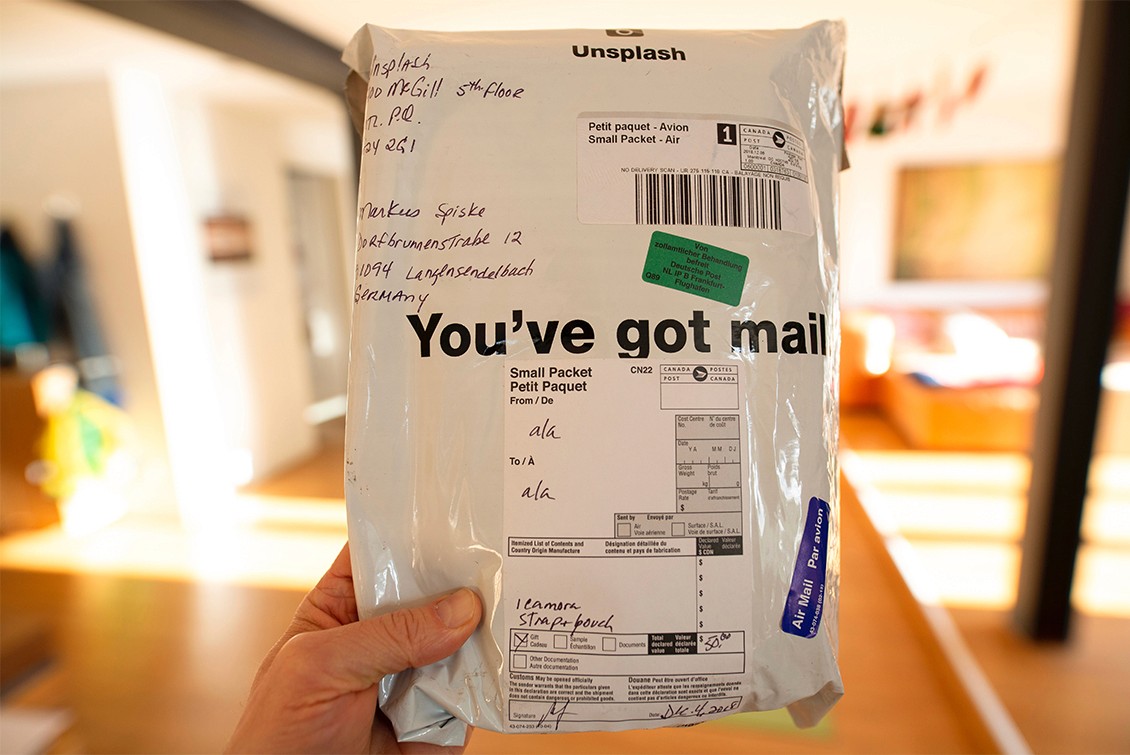
Make sure the recipient's address is clearly printed, including the full (five- to seven-character) UK postcode. The postcode is especially important in the UK, since carriers rely on it to locate the recipient. In some cases a UK address consists only of a house name and postcode, such as "Rose Cottage, A1 2BC", so the postcode is essential.
Make sure all shipping and import documents are complete and in English
Remove all old address labels, barcodes, and other irrelevant markings
Cushion the contents well, for example with bubble wrap, and tape the box all over, including the corners
In general, make sure the parcel can withstand a fall from a height of 1.5 meters
How to address a parcel to the UK
Put the house number before the street name
Write the town and the postcode each on its own line
Put the town name before the postcode
Use the correct postcode (a combination of digits and letters)
A correct UK address looks like this:
John Sample
99 Sample Ave
Sheffield
S1 2PR
UNITED KINGDOM
Prohibited and restricted imports to the UK
Some products are subject to import bans or restrictions, and individual carriers may also refuse to transport certain goods, so check with your carrier first. Most e-commerce items are fine, but the following are prohibited or restricted:
Explosives (including anti-personnel mines), except fireworks, which may be imported with certain restrictions
Controlled narcotics
Firearms, which may only be imported with a special import license
Weapons, including flick and gravity knives, self-defense sprays, and weapons disguised as everyday objects
Offensive or obscene items
Animal products of any kind, including meat, dairy, honey, hides, and live animals (some may be imported with correct customs paperwork), as well as food, including fresh food
Toxic chemicals and substances, including asbestos and ozone-depleting substances
Items with false consumer information, such as false origin, or that infringe copyright or trademarks
Cultural goods, which are subject to special rules and sometimes excluded entirely
Dual-use goods (civilian and military), which require a permit
Rough diamonds, which are strictly controlled
Items that could serve as instruments of torture
You'll find a full list on the UK Revenue & Customs trade tariff website.
How much does shipping to the UK cost?
Shipping costs depend on the volume and weight of your parcel and the delivery speed (for example DHL Express for the fastest option). Other factors include shipping insurance, tracking options, and carbon-neutral shipping. Note that since Brexit, customs duties, adjusted shipping terms, and carrier surcharges can add to your costs. With Sendcloud you ship at pre-negotiated rates.
How long does delivery to the UK take?
Transit times depend on the carrier and mode (road, sea, or air). Leading carriers like UPS, DHL, DPD, and GLS can generally get shipments to the UK within 5 to 10 business days from anywhere in the world, and shipments from the EU usually take only a few business days. Note: since Brexit, new customs processes can delay delivery by an average of about a week.
DHL
DHL offers overnight delivery within the EU and international delivery within 2 to 3 days, plus DHL Express for the fastest shipping, including time-definite options like DHL Express 9:00/10:30/12:00 and DHL Express Worldwide.
UPS
Like DHL, UPS offers standard and express options (within 1 to 2 days), including UPS Standard, UPS Standard to Access Point, UPS Express, UPS Express Saturday Delivery, and UPS Express Saver.

DPD
DPD offers cost-efficient options with delivery times of 1 to 2 days, with standard (DPD Classic) and express (DPD Express) to the UK.
GLS
With GLS, parcels reach the UK within a standard transit time of 2 to 4 days. You can save by using EuroBusinessSmallParcel for smaller parcels (up to 3 kg) and EuroBusinessParcel for larger shipments (up to 40 kg).

UK customs clearance
Since Brexit, delivery can be delayed by customs clearance, even if you choose a guaranteed express service. To avoid unnecessary delays, always make sure your customs paperwork is enclosed and completely filled out.
What customs documents do you need for the UK?
Which documents you need depends on whether you ship via a courier or a postal service, whether the parcel's contents are worth more than £135, and whether the parcel weighs more than 2 kg.
Commercial invoice
If you ship only via a postal service, no commercial invoice is required, and the same is true if you ship via a courier but the value doesn't exceed £135. Above £135, you must enclose a commercial invoice. It documents the shipment and helps determine taxes and duties correctly. List every item individually with quantity, weight, and value, and include the correct HS tariff codes.
Customs declaration
A customs declaration is always required when shipping to the UK. Whether the simple CN22 is enough or you need the more detailed CN23 depends on value and weight: use CN22 for lower-value, lighter shipments (under £135 and under 2 kg), and CN23 for parcels that are heavier than 2 kg or higher in value.
Incoterms
As a retailer, you should be familiar with the current Incoterms, the international trade terms that set out the roles and responsibilities of sender and recipient. DAP (Delivered At Place) is the most popular Incoterm in e-commerce, while DDP (Delivered Duty Paid) is the most customer-friendly and the most common for the UK. You must use DDP for consignments worth under £135.
VAT
The UK's non-EU status changes where VAT is collected: for postal and parcel shipments worth under £135, VAT is paid in the UK (so you need to register for a UK VAT number), while in all other cases VAT is accounted for in the EU country.
GB EORI number
An EORI number is essential for trading with the UK. It's a unique code used to register and identify customs information. You must state the right EORI number on your commercial invoice and customs declaration, and an EU EORI number isn't enough: you need to apply for a GB EORI number from the UK customs authority.
Certificate of origin: benefit from preferential tariffs
Under the EU-UK trade agreement, you can benefit from preferential (reduced or zero) tariffs for products that originate in the EU or the UK. You need to prove the origin formally with a certificate of origin enclosed with your parcel. If your goods are worth more than €6,000, you'll also need to register in the REX system.
How Sendcloud helps you ship to the UK
Sendcloud supports your shipping to the UK with flexible options across the most popular carriers like DHL, UPS, DPD, and GLS, including parcel-shop delivery (the second most popular delivery method among European shoppers). You also get personalized track & trace, smart shipping rules, and a returns portal for your international returns. Questions about shipping to the UK? Get in touch with us.

Author and researcher
Combining expertise in event marketing and communication design, Alexandra leads global event and partner marketing initiatives at Sendcloud for the e-commerce and logistics industry.


Subject matter expert
Pieter van Kemenade is Head of Customer Success at Sendcloud with extensive experience helping online retailers navigate international shipping and logistics challenges. He contributes insights on cross-border commerce, shipping operations, and customer experience.
How much time can you save on shipping?

Share
Recommended for you

Shipping Intelligence
Shipping
E-commerce
Best 9 Shipping Data Analytics Software Tools (2026)
E-commerce
Enterprise
The true cost of post-purchase: what e-commerce shipping really costs enterprise retailers

Shipping to a parcel locker: all the benefits and options
Adding parcel lockers to your shipping options is a smart move. Want to know why? Read our article to discover all the benefits.